
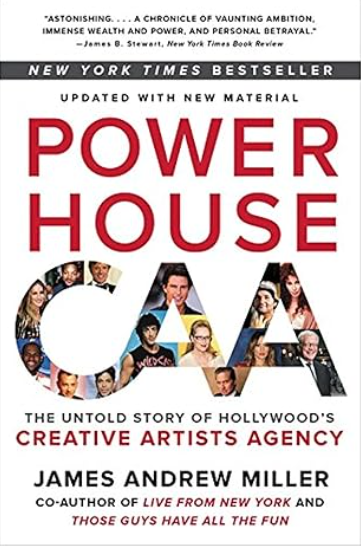
Miller does deserve credit for doing something that no one has been able to do: crack the code of the secret society that is CAA, somehow getting all the principals, with the exception of Bryan Lourd, to talk frankly about the DNA that built the agency out of nothing and turned it into the entertainment industry’s most formidable, yes, powerhouse, in just five years, crushing the competition and virtually monopolizing the talent. Here is Mike Ovitz, once the “most powerful man in Hollywood,” unplugged. He is the Caesar of this drama or perhaps its Richard III, depending on whom you believe while everyone Miller interviewed seems to agree that the hero, its Brutus, is his close friend Ron Meyer.
Powerhouseessentially is an oral history that features a who’s who of boldfaced Hollywood names, like Martin Scorsese, Tom Cruise, Bill Murray, David Letterman, Tom Hanks, Goldie Hawn, Sylvester Stallone, Joel Silver, Tom Pollock and Dustin Hoffman, as well as scores of agents both inside and outside of CAA, whose names will be meaningless to the general reader. Displaying a taste for whimsy, Miller even includes fixer Anthony Pellicano, the real-life Ray Donovan, who was sentenced to a long term in prison (recently vacated) in 2008. ass,” but the town’s rivals and players (including Michael Ovitz) reveal the truth is far more complex in James Andrew Miller’s new book ‘Powerhouse: The Untold Story of Hollywood’s Creative Artists Agency.’”]
The book covers the rise of CAA, when the five founders left the sclerotic William Morris Agency in 1975; the fall, if it can be called that, when Meyer and Ovitz left in 1995; and the resurrection, led by the so-called Young Turks who, continuing in Ovitz’s footsteps, transformed CAA from a talent agency into a multi-armed octopus with tentacles in everything from banking to sports. Miller identifies the unique approach adopted by CAA that contributed to its stunning success: a one-for-all-and-all-for-one spirit of cooperation within the agency that differed dramatically from the rigid, hierarchical, compartmentalized William Morris, combined with a ferocious, take-no-prisoners attitude toward the competitors. Ovitz famously used military metaphors to refer to his agents, describing them as “soldiers.”




Reviews
There are no reviews yet.