
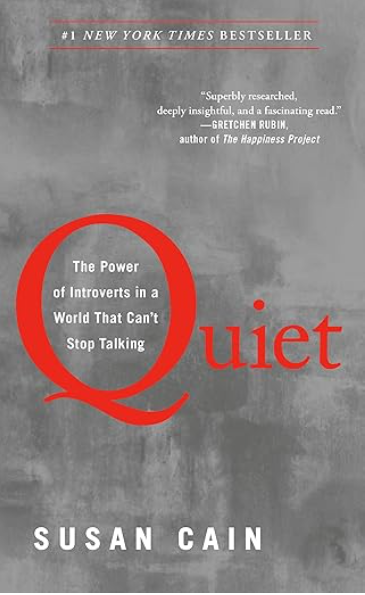
Cain is an introvert. It has always been, she writes, “private occasions that make me feel connected to the joys and sorrows of the world, often in the form of communication with writers and musicians I’ll never meet in person”. She’s an introvert in a world that, she argues, excessively and misguidedly respects extroverts. We make them our bosses and our political leaders. We foolishly admire their self-help books. Before the industrial revolution, she writes, American self-help books extolled character. Nowadays it’s personality. We introverts attempt to emulate extroverts, and the stress of not being “true to ourselves” can make us physically and mentally ill. One introvert Cain knew spent so much of his adult life trying to adhere to the extrovert ideal he ended up catching double pneumonia. This would have been avoided if he’d spent time recharging his batteries in toilet cubicles, and so on.
At the Harvard Business School, socialising is “an extreme sport”. Extroverts are more likely to get book deals and art exhibitions than their introverted counterparts. Cain had to persuade a publisher she could conquer her stage fright and promote herself at book festivals before they agreed to take her on. In America, extroverted parents have been known to send their introverted children to psychiatrists to have their introversion “treated” out of them. We think extroverts are great because they’re charismatic and chatty and self-assured, but in fact they’re comparatively narcissistic and unthoughtful and we’re committing a grave error structuring our society around their garrulous blah.
Cain says we’re “especially empathic”. We think in an “unusually complex fashion”. We prefer discussing “values and morality” to small talk about the weather. We “desire peace”. We’re “modest”. The introvert child is an “orchid – who wilts easily”, is prone to “depression, anxiety and shyness, but under the right conditions can grow strong and magnificent”. When I get to this part I think: Yes! We are like orchids! With good parenting we can become “exceedingly kind, conscientious and successful at the things that matter to us”. Then I feel embarrassed that I derived pleasure from being compared to an orchid and I realise that sometimes Cain succumbs to the kind of narcissistic rhetoric she eschews in extroverts.
Still: her suggestions on how to redress the balance and make the world a bit more introvert-friendly are charmingly cautious. The way forward, she argues, is to create offices that have open-plan bits for the extroverts and nooks and crannies where the quiet people can be quiet. A bit like the Pixar offices. In this she reminds me of the similarly measured Jonathan Safran Foer, whose anti-meat lectures climax in a suggestion that we should try if possible to eat one or two vegetarian meals a week. Give me this kind of considered good sense over showy radical polemicism any day.
Please read to get more details…

Reviews
There are no reviews yet.